
Michigan is missing talent-magnet neighborhoods
Last year, we released a proposal for the Neighborhood Talent Concentration Initiative (NTCI). The proposal was built on what we see as the new calculus


Last year, we released a proposal for the Neighborhood Talent Concentration Initiative (NTCI). The proposal was built on what we see as the new calculus


As the leader of a youth-focused foundation in Detroit, I know firsthand that the Working Parents Tax Cut is a life-changing policy for hardworking families

Last fall, we released our proposal for a Working Parents Tax Credit (WPTC) here in Michigan – a large, refundable tax credit directed to working


Recent polling of likely 2024 voters in Michigan, conducted by Impact Research for Michigan Future, Inc., finds strong support for a one billion dollar working

For years, we have been arguing that the economic development imperative in Michigan is to create places in our state that can retain and attract
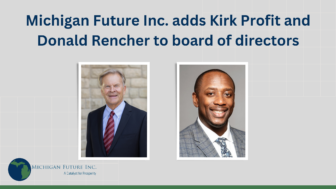
Michigan Future Inc., a Michigan-focused nonpartisan, nonprofit think tank, today announced the addition of Kirk Profit, founder of Profit Legal Services, PLLC, and Donald Rencher,